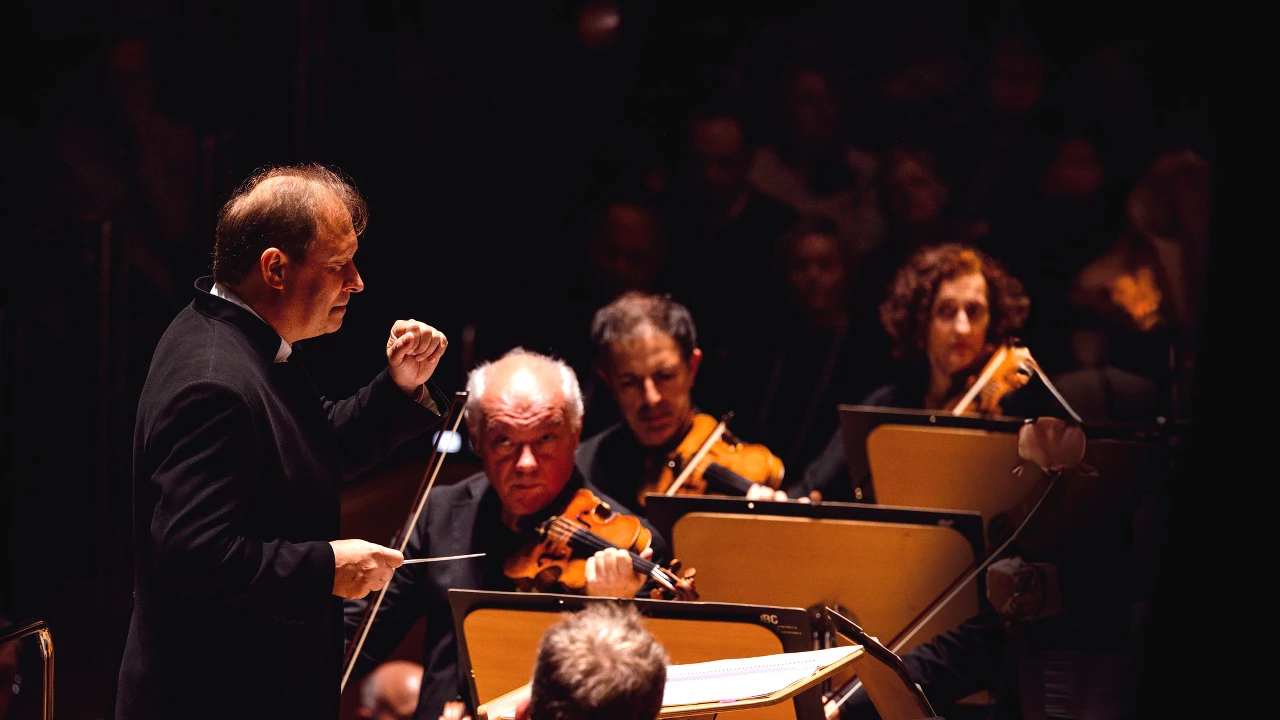


Brahms’s First Symphony took shape over many years of uncertainty, under the shadow of Beethoven. Its premiere, when the composer was 43, marked a turning point in his career. The Barcelona Symphony Orchestra (OBC), conducted by Ludovic Morlot, performs the work at L’Auditori de Barcelona, where the tension of its opening bars eventually gives way to a finale of great expressive power.
The concert also explores two contrasting sound worlds: Ravel’s Ma mère l’Oye, a suite inspired by children’s stories, and Rewilding by American composer Gabriella Smith. Co-commissioned by L’Auditori and receiving its Spanish premiere, the latter explores the processes of nature’s regeneration through orchestral rhythms and textures.
This is good to know

Brahms’s First Symphony was nicknamed Beethoven’s Tenth by conductor Hans von Bülow. The resemblance between the final themes of the two symphonies did not escape Brahms’s contemporaries.
Ma mère l’Oye was originally written for piano four hands and dedicated to two children, Mimie and Jean Godebski. Ravel later orchestrated it, transforming these short children's pieces into a world of instrumental colour.
In Rewilding, Gabriella Smith brings unusual objects into the orchestra: bicycle wheels, metal bowls and nuts. The percussionists turn them into instruments, bringing the sounds of everyday materials into the concert hall.
