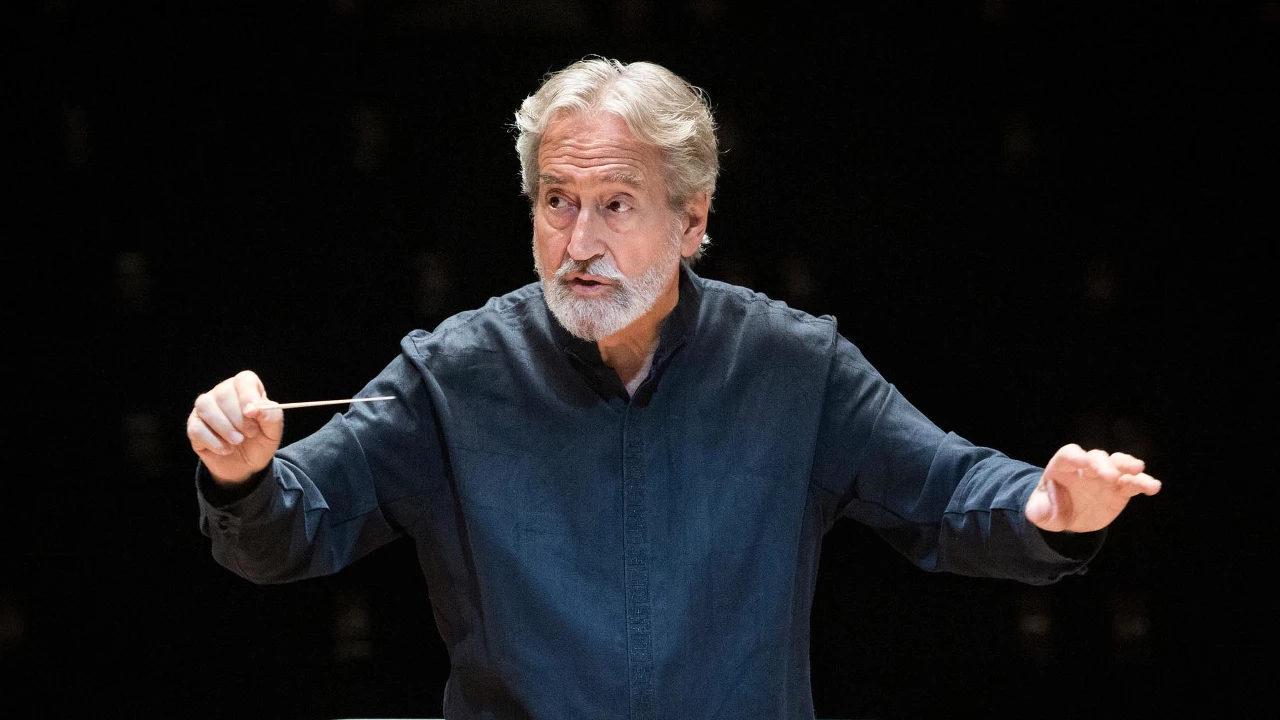


At L’Auditori de Barcelona, Jordi Savall presents a journey through three centuries of sacred music, all centred on a single liturgical text: the Te Deum. The programme brings together the solemnity of the French Baroque, represented by Michel-Richard de Lalande; Handel’s Utrecht Te Deum, composed to celebrate the peace of 1713; and the contemplative music of Arvo Pärt, shaped by repetition and the resonance of sound.
La Capella Nacional de Catalunya and Le Concert des Nations, conducted by Savall, perform these three musical interpretations alongside six vocal soloists. The result sets the ceremonial splendour of the Baroque against the more austere spirituality of contemporary music.
This is good to know

Although the Te Deum is traditionally sung in Latin, Handel used an English translation for his Utrecht Te Deum. The work was first performed at St Paul’s Cathedral in London in 1713.
Arvo Pärt's Te Deum was inspired, in part, by a conversation about the more than twenty shades of blue visible in the mountains. The composer translated this image into the structure of the music.
