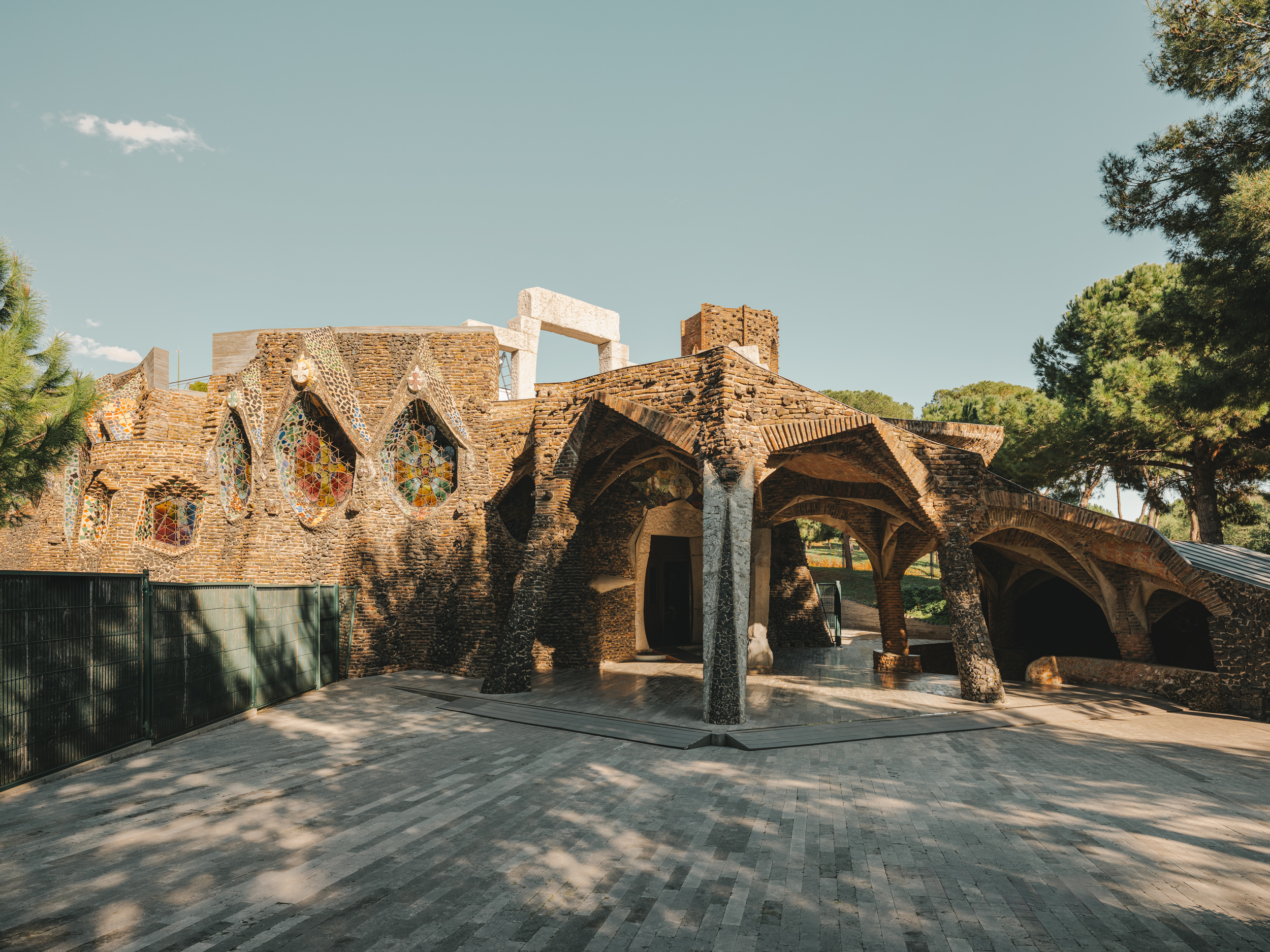
The Cripta Gaudí is an unfinished church designed as an experimental space within the Colònia Güell in Santa Coloma de Cervelló, around 20 minutes from Barcelona. More than a place of worship, it is a space where structure becomes organic: leaning columns that seem to grow from the ground, arches that flow naturally and rough, tactile materials that connect with the earth. Light does not enter directly but filters through in shifting tones and shadows. The intimate, almost subterranean atmosphere points to solutions later developed in the Sagrada Família, capturing Gaudí in the midst of constant experimentation.
This is good to know

Only the crypt and the porch were completed. The project was never finished and was consecrated in 1915, which explains its unusual, partly subterranean feel.
Gaudí used hanging models made with strings and weights to calculate the structures, an experimental method that allowed him to work out forms without conventional plans.
It is listed as a UNESCO World Heritage Site as part of Gaudí’s work, recognised for its importance as a key space for architectural experimentation.


