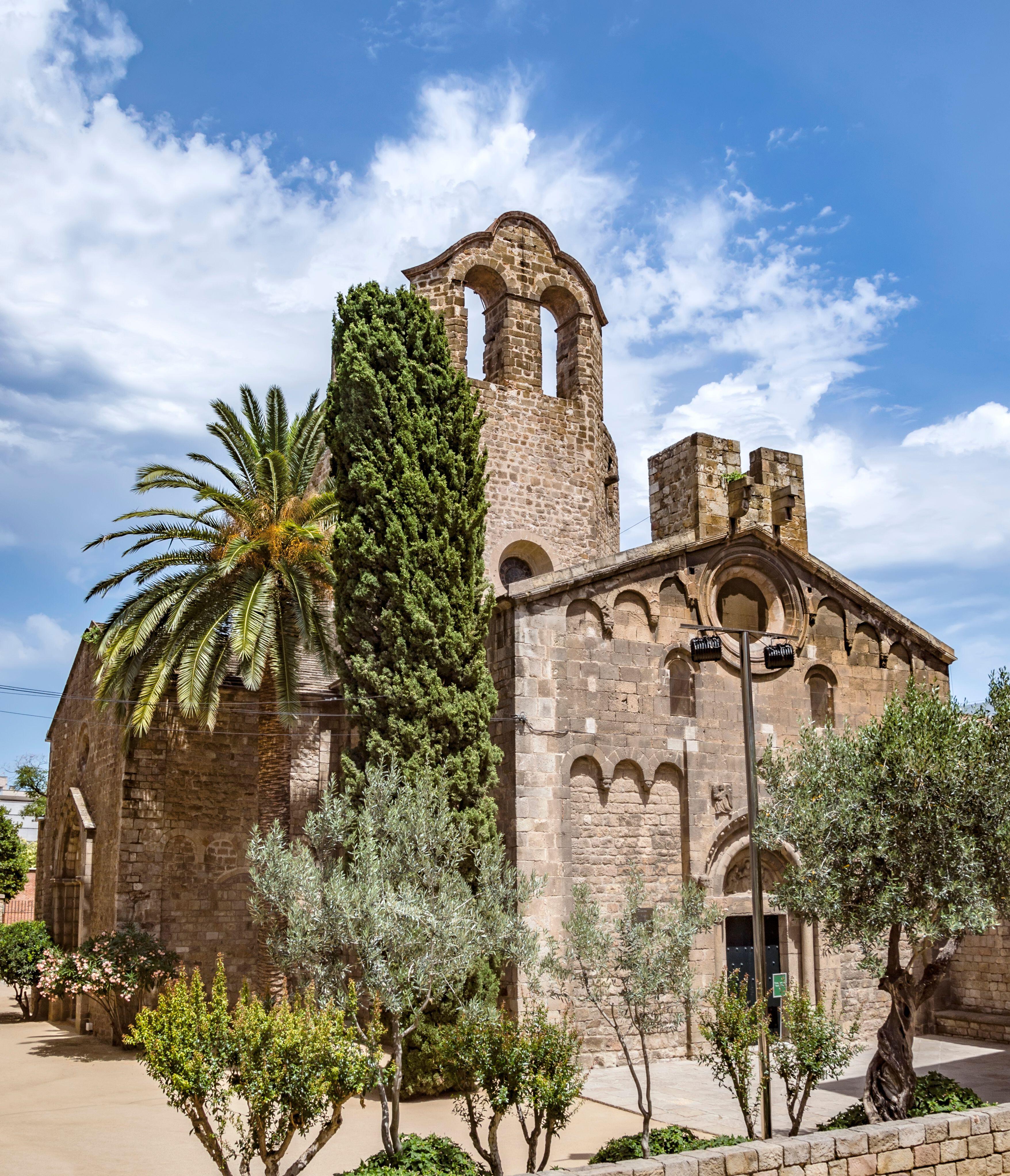


The Monestir de Sant Pau del Camp, one of Barcelona’s oldest churches, preserves the spiritual imprint of the city’s monastic life in its purest form. In the heart of the Raval, its Romanesque walls shelter visitors from the city’s bustle, as if holding centuries of quiet contemplation within. The cloister, small and harmonious, invites the imagination to follow the measured rhythm of monastic life, while the sculpted capitals tell stone-carved fables with remarkable delicacy. The cruciform layout and three apses reinforce the restrained elegance of a space where nothing is superfluous. More than a mere architectural relic, this is a discreet sanctuary where calm is not imposed but discovered, quietly revealing its timeless presence.
This is good to know

The semicircular arch of the entrance does more than grant access to the monastery – it signals a shift in time: inside, the present gives way to contemplation.
On the cloister’s capitals, mythological creatures and oriental motifs reveal that medieval Barcelona was already a crossroads of cultures and perspectives.
The frieze of blind arches that runs along the exterior rests on sculpted heads, subtle details that have endured for centuries, speaking softly without raising their voice.


