October - March: Tuesday to Saturday, 10am to 6pm. Sundays and public holidays, 10am to 2:30pm.
April - September: Tuesday to Saturday, 10am to 7pm. Sundays and public holidays, 10am to 2:30pm.
Closed: Mondays (except public holidays), January 1st, May 1st, December 25th and 26th.
Check all schedules on the official website.
Accessibility
The venue has adapted public transport access via metro (L3, Paral·lel station) and connection with the Montjuïc Funicular. People with a disability card are eligible for a reduced fare. Assistance dogs are allowed throughout the venue. Audioguides are available in several languages, and adapted tours can be arranged for groups with special needs upon reservation. For specific accessibility inquiries, contact is available by phone or email.
Visual
Guide dogs are allowed throughout the venue, facilitating accompaniment for people with visual disabilities.
Auditory
Accessibility information not available.
Motor
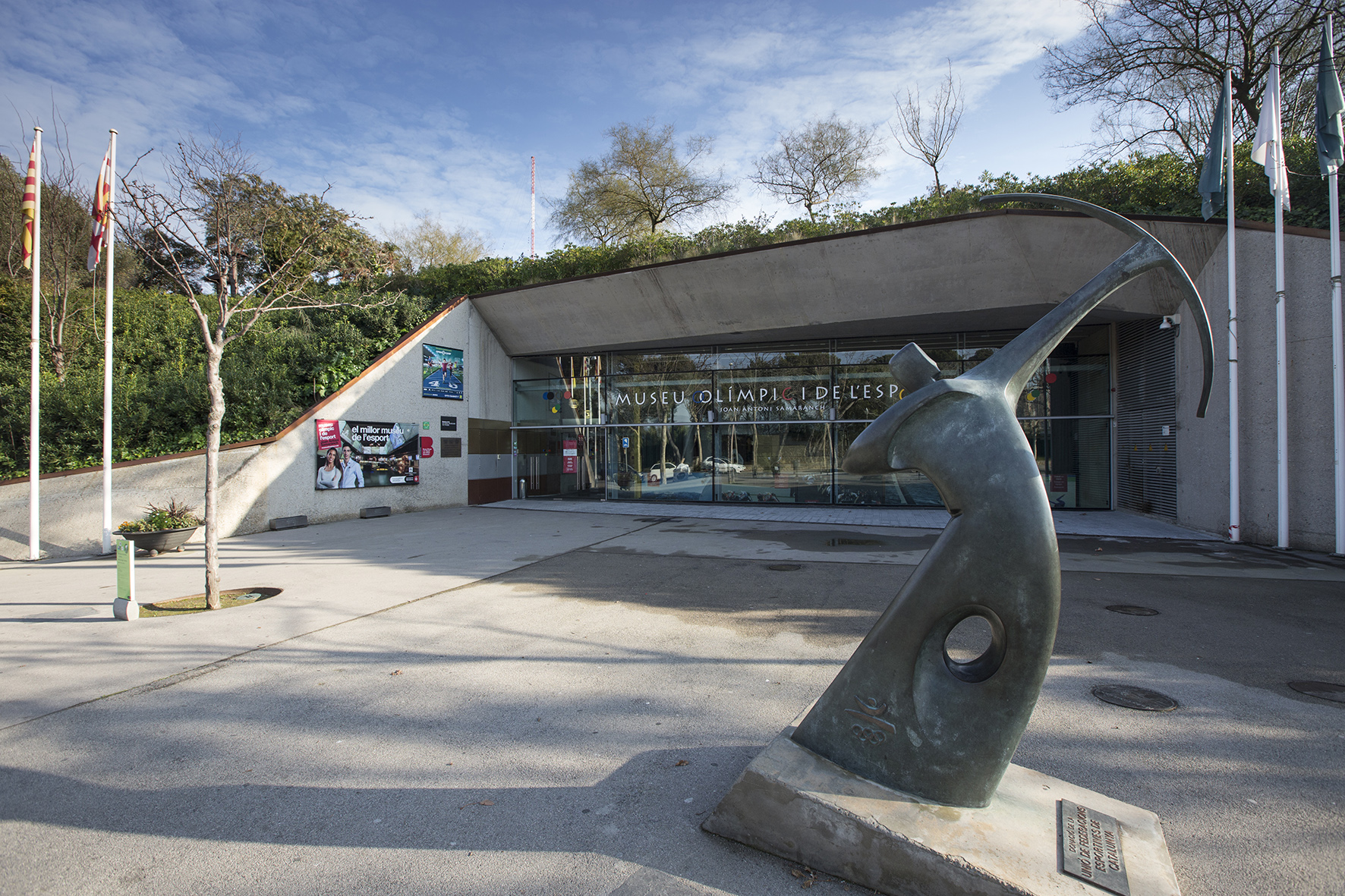
The building is accessible for wheelchair users, with no architectural barriers. The entrance is level with two manual glass doors, 160 cm wide. The elevator has a wide door (90 cm) and a control panel with Braille and raised lettering at 115 cm height. The reception desk is at 115 cm height. The interior route is mainly via a continuous, gently sloping ramp with a wide handrail and a cement floor, with sufficient space for wheelchair circulation. Wheelchairs are available for loan. The adapted restroom on the ground floor has a sliding door (80 cm), fixed and folding grab bars, free space under the sink, automatic tap, and a baby changing table.
Cognitive
Accessibility information not available.
Av. de l'Estadi, 60
Museums
The Museu Olímpic i de l'Esport Joan A. Samaranch is an interactive centre devoted to the history of sport and the Olympic spirit, located on Montjuïc. Through immersive experiences, simulators and a permanent collection, the museum pays tribute to great athletes and the universal values of effort and achievement. The museum blends advanced technology, historical artefacts and sensory resources to reveal the cultural and social dimensions of sport. The Barcelona of 1992 is not merely a memory: it marks the starting point of a city that recognised sport as part of its identity.
This is good to know

Dare to compete virtually with top athletes, try a cycling simulator or test your own strength. A playful way to experience what it means to push your limits firsthand.