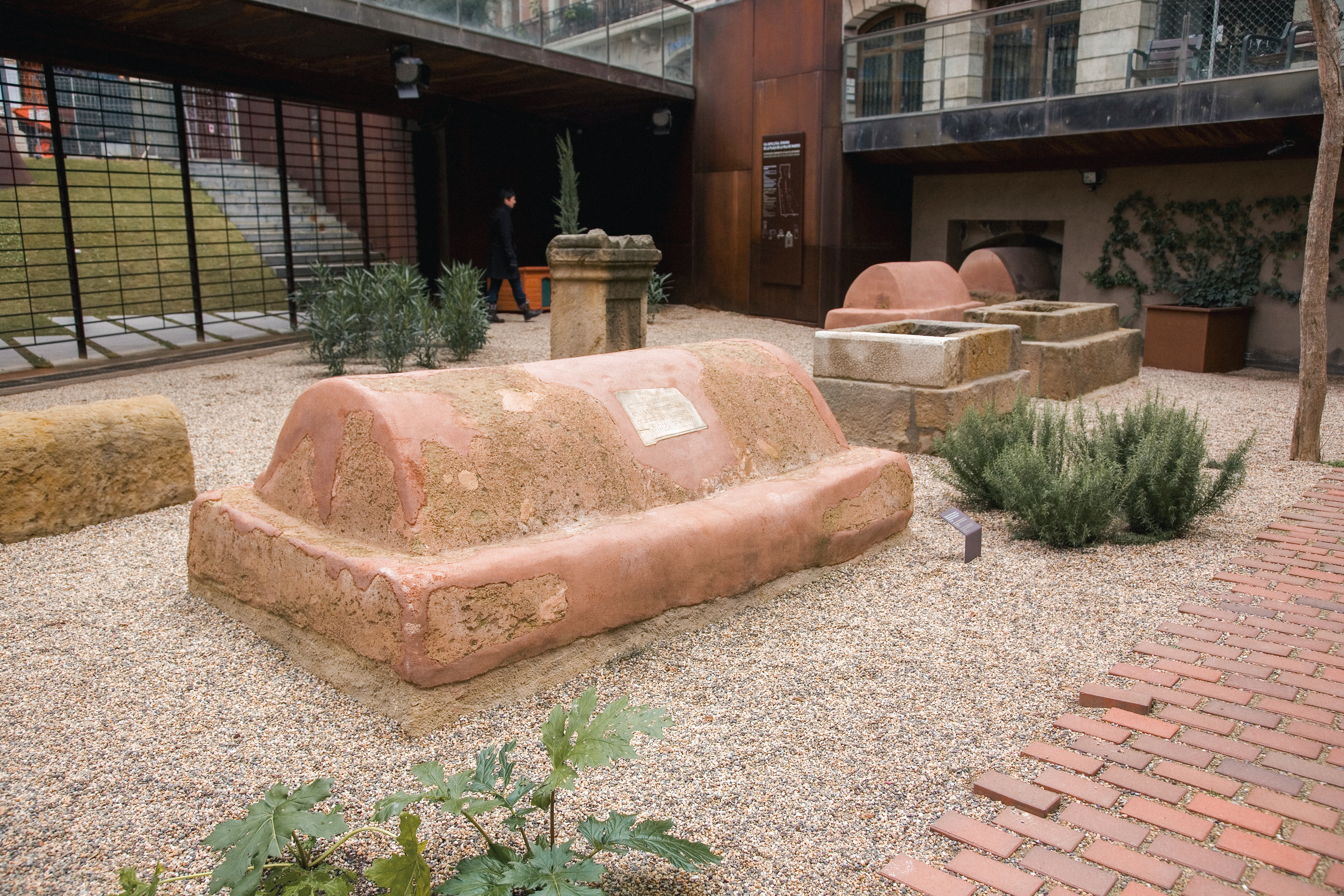


The Via Sepulcral Romana (Roman burial road) in the Museu d’Història de Barcelona is a necropolis outside the walls of ancient Barcino, alongside one of its main access roads. This open-air site preserves tombs and funerary monuments from the 1st to 3rd centuries AD, arranged as if still guarding the path. Among inscriptions and stelae, rituals, hierarchies and beliefs emerge, revealing how death was understood in the Roman city, in a carefully presented archaeological space that brings together history, art and the city’s urban fabric.
This is...good to know

This is one of the few surviving examples of necropolises that once lined the roads leading into Roman cities.
Around 70 tombs and funerary monuments remain, laid out along a stretch of the ancient road.
There is also an exhibition space with objects found during excavations, offering insight into funerary rituals and how the territory was organised in Roman times.


