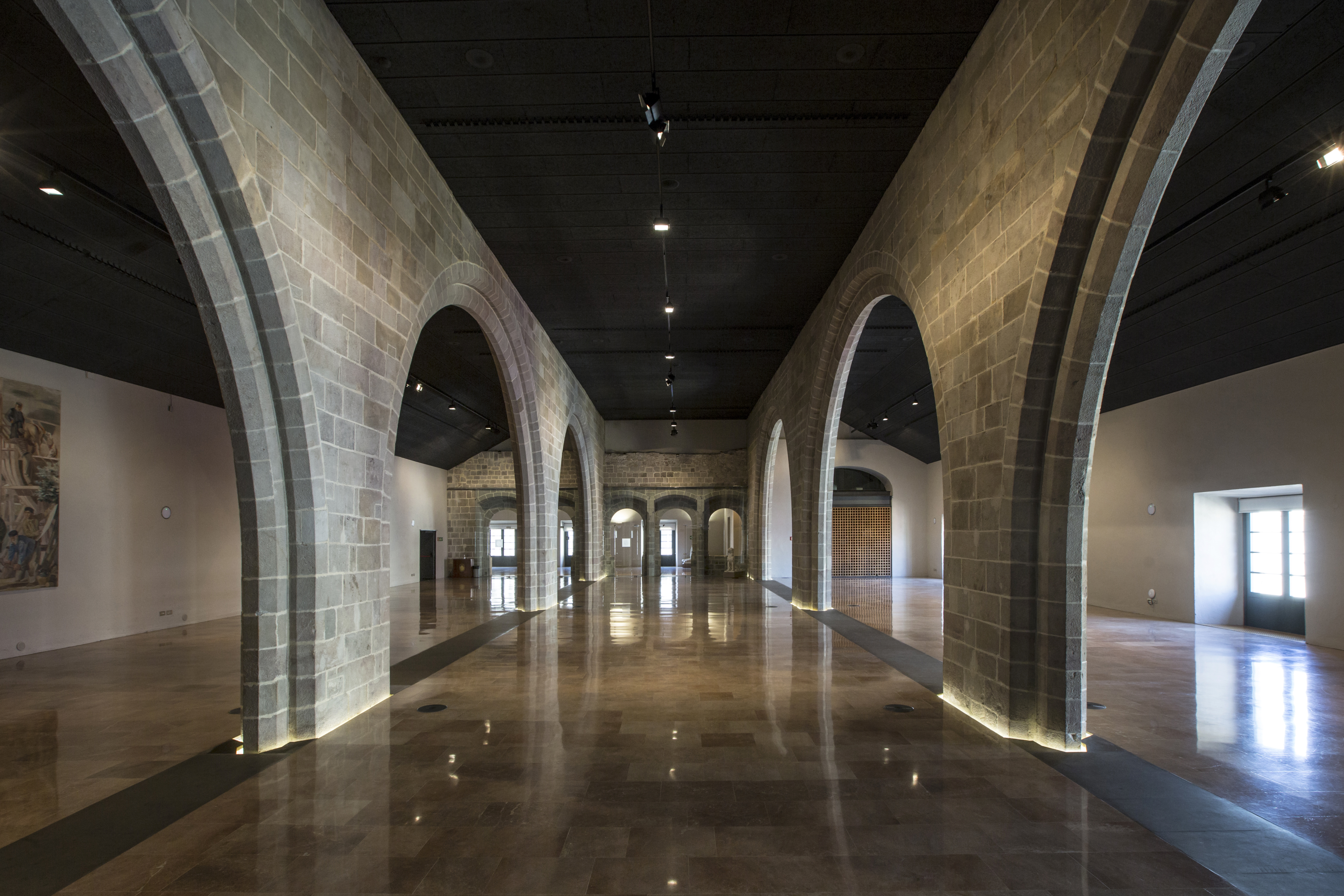


The Llotja de Mar is one of Barcelona’s finest examples of civil Gothic architecture, tucked away in the Ribera neighbourhood. Its current appearance blends an 18th-century neoclassical façade with a Gothic interior that recalls the medieval heyday of maritime trade. Over the centuries, the building has served many roles: market, stock exchange, art school and institutional hub. In its historic halls, such as the Hall of Contracts and the Consuls’ Hall, you can still feel the echoes of the artists, merchants and thinkers who shaped the city’s story of progress.
This is good to know

Since 1775, the Llotja has been home to the Royal Academy of Fine Arts, where generations of artists have trained. Picasso’s father taught here, and Pablo himself received part of his education within these walls.
Look closely at the interior: behind its sober façade lies a scenographic richness of columns, reliefs and ceilings reminiscent of a classical theatre.
The interior of the building is open to visitors, with guided tours available during the summer, Christmas and Easter holiday periods.


