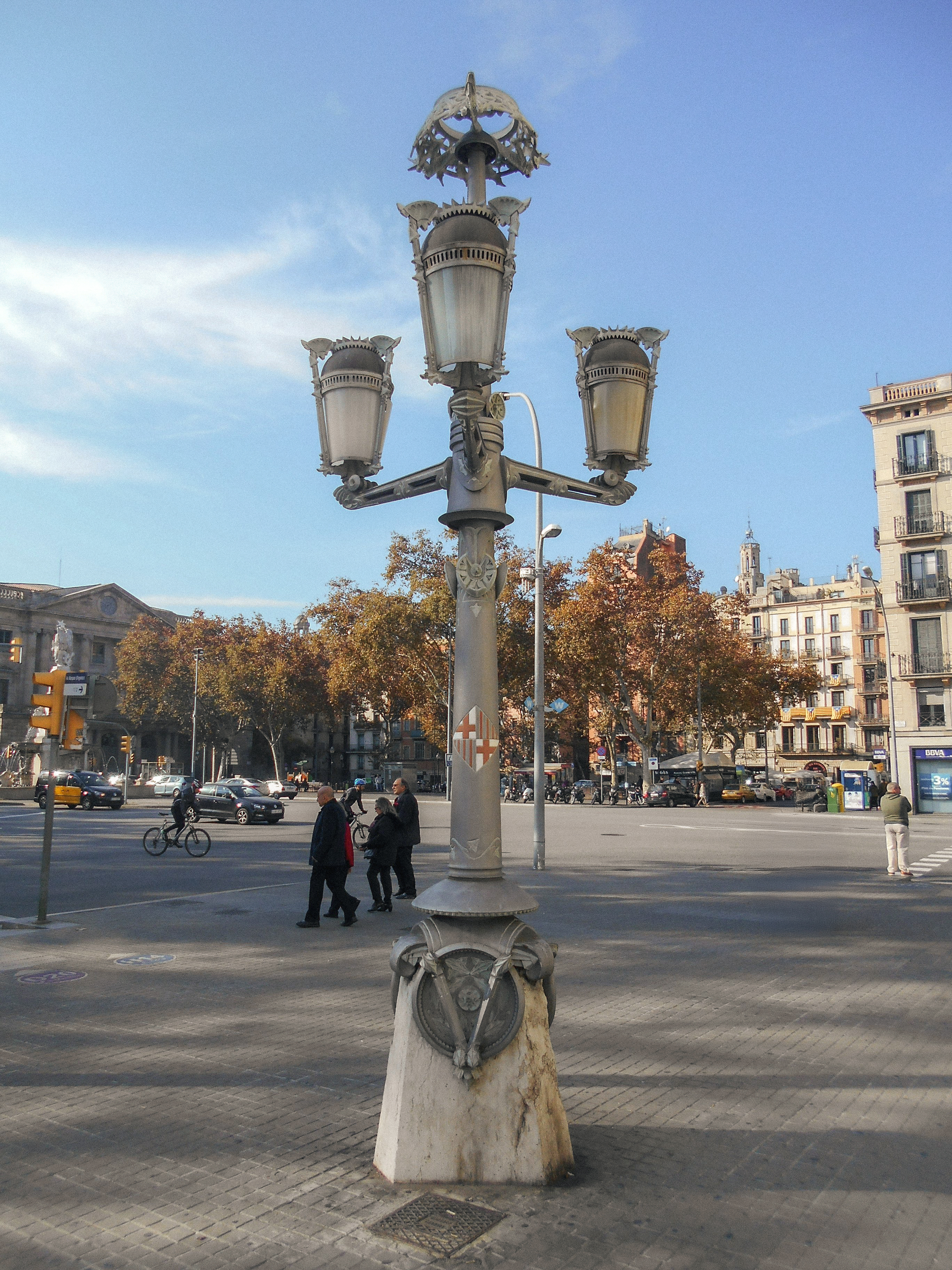


For centuries, Pla de Palau was one of Barcelona’s most important commercial and administrative hubs, due to its proximity to the port. Before Plaça de Catalunya became the city’s new centre, goods, travellers and tales from the sea passed through here. Today, the area still bears traces of that past: the Llotja de Mar, the former Customs House (now a Government Office), two iron lampposts designed by Gaudí and the Font del Gei Català, which presides over the square. To walk through this space is to traverse one of the places where maritime Barcelona has left its mark.
This is good to know

The square is now a key connecting point between El Born, La Barceloneta and Port Vell, as well as one of the busiest thoroughfares between the historic centre and the waterfront.
The square takes its name from the former Palau Reial or Palau del Virrei, which served as the residence of the captains general and viceroys until it was destroyed by fire in 1875.
