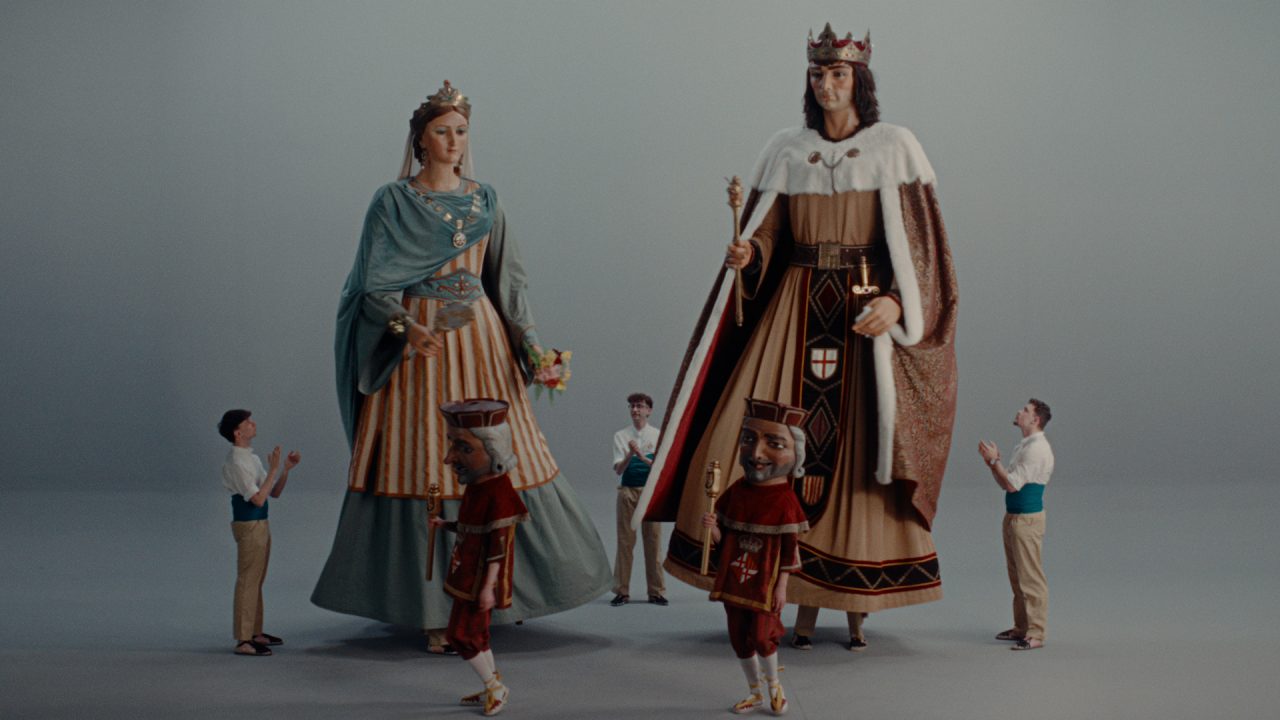
Celebrating everything is very much part of the Mediterranean way of life. Dressing up and becoming someone else is something people do everywhere. But doing it while parading through streets lined with works of art is something distinctly ours. Barcelona’s giants and big-headed figures and are among the oldest of their kind in the world, and in 2024 they marked six hundred years of dancing through the city’s squares and streets.
Tradition is often thought of as something fixed, handed down unchanged from one generation to the next. With gegants and capgrossos, though, things are far less rigid.
The way they are made and lived varies enormously from place to place. In some towns, giants and big-headed figures come out and dance together; in others, they appear separately. Some parades are more formal, with set dances and carefully rehearsed choreography; others are more festive, with more room for improvisation and even a touch of unrestrained revelry.
One tradition, many ways of living it, almost one for every town. In Barcelona, there is practically one for every neighbourhood, inherited from the former villages of the Pla de Barcelona, now part of the city but still very distinct in character.


In Barcelona, if someone is particularly fond of dancing, you might hear they “dance more than the Gegant de la Ciutat”, one of the city’s oldest and most beloved giants.
Giants, larger-than-life ceremony
And if you see two large papier-mâché figures lurching towards you, your first instinct will probably be to step aside, and your second to wonder whether you are seeing things. If that happens in Barcelona, there is good news: you are not. And perhaps even better news: you are invited to dance with them.
Because these are no ordinary figures. They are giants: monumental characters made of wood and papier-mâché, representing kings, nobles or figures drawn from the history and imagination of each neighbourhood. Carried from within on the shoulders of their bearers, they come to life to the sound of gralles (traditional wind instruments) and drums, turning, moving forward and dancing with the crowd.
They are majestic figures, symbols of pride and local identity in every neighbourhood. There is often more than one pair per district, but the oldest stand out: the Gegants de la Ciutat, with their own music and dance, and the well-known Gegants del Pi. Together they form one of the city’s most iconic and enduring dancing pairs.
In short, the best way to honour them is the way they expect: by singing and dancing along.


Big-headed figures: our own kind of mischief
Everyone knows a proper celebration can’t be all seriousness, grandeur and good manners. A good festival needs a bit of revelry and hubbub, and the freedom to laugh at itself.
And that is where the capgrossos come in, the cheekier side of the tradition. Smaller, quicker and more mischievous, they are there to get close to people, spark reactions and keep things lively. They often appear alongside the giants, but their role is different: teasing, humour and a touch of controlled chaos.
They are the community looking at itself without formality or pretence, exaggerating its own traits and laughing at them as it goes. A knowing wink to everyone involved, from anonymous faces in the crowd to familiar ones within it.
Together, gegants and capgrossos form one of Catalonia’s most beloved pairings in street celebrations. Different in character, but never really apart.

